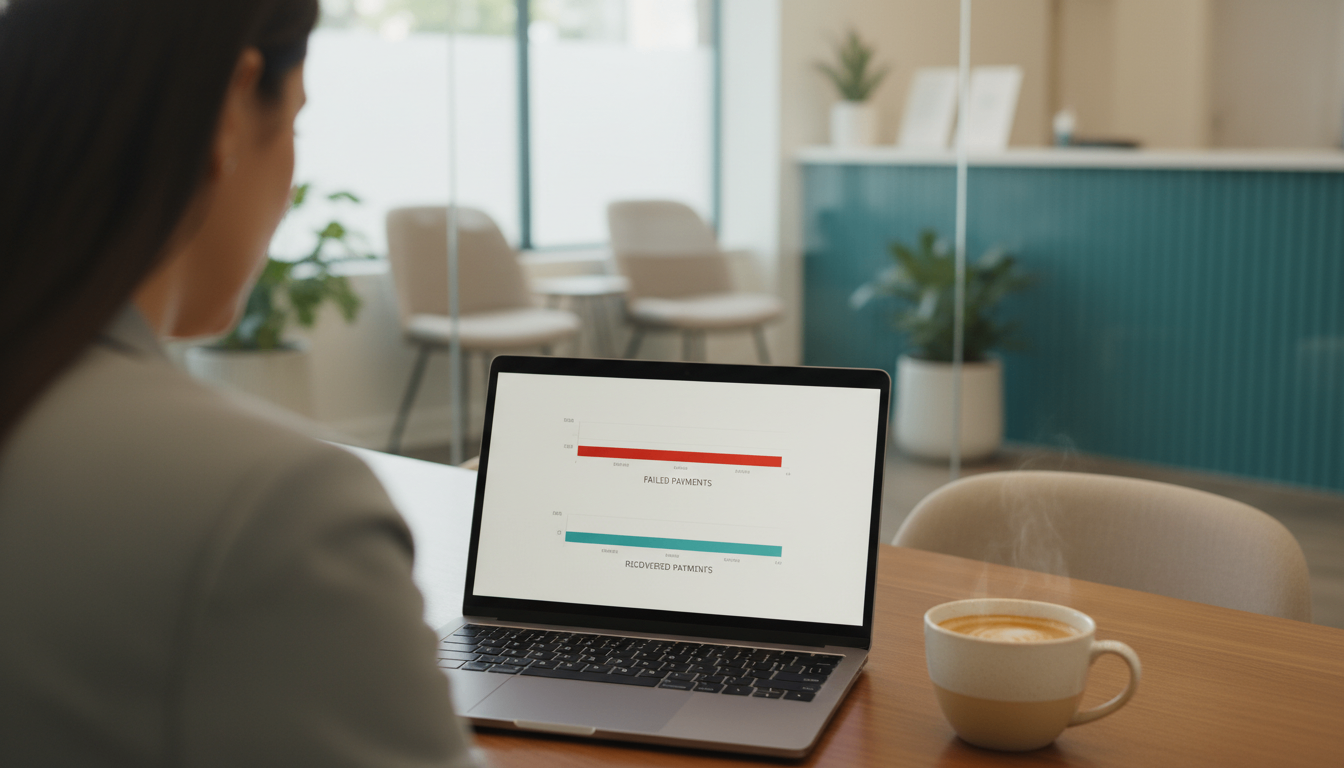
When a payment fails, the gap between the failure and the fix is where revenue is lost. If fixing it means a phone call, a login, or digging out a statement, most people put it off, and a recoverable payment slowly becomes a write-off. A secure pay link closes that gap to about thirty seconds: the patient taps a link, fixes the payment, and it is done. It is a small piece of plumbing that quietly recovers a lot of money.
This is for practices that want failed payments fixed before they turn into losses. Here is what a secure pay link is, the thirty-second flow it enables, why the absence of a login matters so much, and why it recovers more than chasing ever does.
The fix should take seconds, not a phone call
Every step between a failed payment and its resolution is a chance for the patient to drop off. A phone call has to be answered. A login has to be remembered. A form has to be filled out. Each of those is friction, and friction is what turns a recoverable payment into a lost one. The whole design goal is to collapse the fix into the smallest possible action, so the patient resolves it in the moment rather than meaning to later.
What a secure pay link is
A secure pay link is a one-time, private link sent straight to the patient, usually by SMS or email, that takes them to a page where they can pay the outstanding amount or update their card. It is secure because it is unique to that patient and that payment, and it carries the context with it, so the patient does not have to find anything or prove who they are through a separate account. It is the difference between "log in, navigate to billing, find the failed charge" and "tap here, fix it".
The thirty-second flow
The flow is deliberately tiny. The patient receives the link the moment a payment fails. They tap it on their phone. They see exactly what needs fixing, the amount due or the expired card, and they pay or enter new card details. It is done, and the payment is recovered. There is nothing to download, no password, no call to make. Because it takes seconds and happens while the issue is fresh, the patient actually does it, which is the entire point.
Why no login matters
The single biggest reason these links work is that patients never have to log in. Logins are where good intentions die: a forgotten password, an account they did not know they had, one more barrier between wanting to fix it and fixing it. By carrying the patient straight to the action through a secure link, you remove the step that causes most drop-off. The patient experience is closer to confirming a delivery than to navigating a billing portal.
Why it recovers more than chasing
Chasing a failed payment by phone is slow, awkward and easy to deprioritise, for your team and the patient alike. A secure pay link recovers payments without a conversation, at the moment of failure, which is when recovery is most likely. It also reserves your team's time for the rare cases that genuinely need a human, instead of spending it on routine card glitches. Recovering quietly and instantly beats chasing loudly and late, both for the bottom line and for the relationship, which is why secure links sit at the heart of good failed-payment recovery.
How SmilePass uses secure links
SmilePass builds the secure pay link into its handling of failed and overdue payments. When a charge fails, it retries automatically and sends the member a secure link to pay or update their card, with no login required, so most failures are fixed in seconds without anyone lifting the phone. It is the same mechanism that quietly recovers the cost of failed cards before they become lost revenue.
The takeaway
The faster and easier the fix, the more failed payments you recover, and nothing is faster than a secure pay link. Send the patient a one-time link the moment a payment fails, let them fix it in thirty seconds with no login, and you recover quietly what chasing would recover slowly or not at all. It is a small piece of plumbing that pays for itself every time a card glitches.
Frequently asked questions
What is a secure pay link?
A one-time, private link sent to the patient by SMS or email that takes them straight to a page to pay an outstanding amount or update their card. It is unique to that patient and payment and carries the context with it, so there is nothing to find or log in to.
Why is a secure pay link faster than other ways to fix a payment?
Because it collapses the fix into a single tap, with no phone call, login or form. The patient sees exactly what needs fixing and resolves it in about thirty seconds, while the issue is fresh, which is when recovery is most likely.
Why does avoiding a login matter so much?
Logins are where good intentions die, a forgotten password or an unknown account is enough to make a patient give up. Carrying them straight to the action through a secure link removes the step that causes most drop-off.
Does a secure pay link recover more than phoning the patient?
Generally yes. A link recovers payments instantly at the moment of failure, without an awkward conversation, and reserves your team's time for the few cases that genuinely need a human, rather than routine card glitches.
Written by Cristian Dunker, BDS, dentist (oral rehabilitation), with MBAs in Marketing (Sociesc-Brazil), Project Management (FGV-Brazil) and Finance (Bond - QLD).