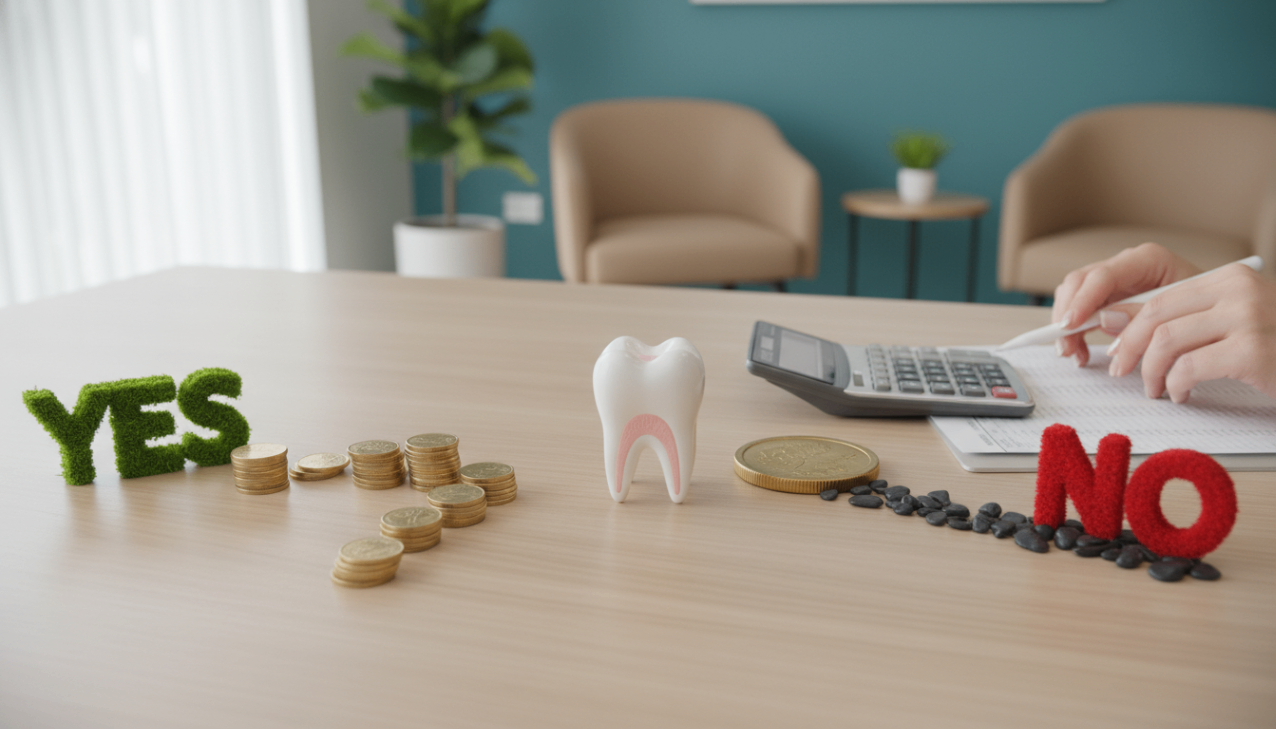
An empty chair is one of the most expensive things in a practice. A patient who books a long appointment and does not show, or cancels the night before, leaves a gap that is almost impossible to fill at short notice, and the clinician is paid to sit idle. A small deposit taken at booking changes the maths entirely, and it is far easier to ask for than most front desks expect.
This is for reception teams and the managers who set the policy. Here is why a pre-treatment deposit is worth taking, when to take one, how to ask without any awkwardness, and the difference between holding and charging.
Why take a deposit before treatment
A deposit does two useful things. It dramatically reduces no-shows and last-minute cancellations, because a patient with money committed turns up. And it protects you on appointments that cost you money to prepare, such as those needing lab work or a long block of chair time. The deposit is not about distrust, it is about respecting everyone's time, the patient secures their spot and you protect a session you cannot easily refill.
When to take one
You do not need a deposit on a routine check-up (ideally, they should be on a membership!). Reserve it for the appointments where a no-show genuinely hurts: long or high-value treatment, anything involving lab work or materials ordered in advance, and, where appropriate, new patients booking a big first appointment. A simple, consistent policy, deposits on appointments over a certain length or value, is fairer and easier to apply than deciding case by case.
How to ask without awkwardness
The key is to treat it as a normal part of booking, not a special request. Said plainly and warmly, it rarely raises an eyebrow: "Because we set aside a long appointment for this, we take a small deposit to secure it, which comes off your treatment on the day. Can I take that now?" Framing the deposit as securing their spot, and making clear it counts towards the treatment rather than being an extra charge, turns it into a service rather than a hurdle. It is the same calm, matter-of-fact tone that works for any money conversation at the desk.
Holding versus charging
There are two ways to take a deposit, and the difference matters. You can charge it, taking the money now and crediting it against the treatment, or you can place a hold, reserving an amount on the card without actually debiting it, to be released or drawn on at treatment. A hold is gentle and well suited to securing a booking, while a charged deposit suits treatment with real upfront costs. Knowing which to use for which situation keeps the approach proportionate.
How SmilePass takes deposits
At the desk, SmilePass gives your team two clear payment types: take an Instant payment or start a Plan (payment on hold is a feature under development at this stage). For a booking deposit you place a Hold or take a small Instant payment in seconds, and it is recorded against the patient, so it is simple to apply to the treatment on the day. Using deposits this way is a deliberate strategy for treatment-day deposits that cut no-shows, and because it runs through the same system as the rest of your payments, there is nothing extra to reconcile.
The takeaway
A pre-treatment deposit is one of the simplest protections a practice has against the cost of an empty chair. Take one on long or high-value appointments, ask for it as a normal part of securing the booking, and choose a hold or a charge to suit the situation. Done warmly and consistently, deposits cut no-shows, protect your schedule, and patients barely blink.
Frequently asked questions
Do deposits really reduce no-shows?
Yes. A patient who has committed money to a booking is far more likely to attend or to give proper notice if they cannot. Deposits are one of the most effective tools a practice has for protecting long, hard-to-refill appointments.
Which appointments should require a deposit?
Long or high-value treatment, anything involving lab work or pre-ordered materials, and, where appropriate, large first appointments for new patients. Routine check-ups generally do not need one. A consistent policy is easier to apply than case-by-case calls.
How do I ask for a deposit without putting patients off?
Treat it as a normal part of booking and make clear it secures their spot and counts towards the treatment. Said warmly and plainly, most patients accept it without a second thought.
What is the difference between a hold and a charged deposit?
A hold reserves an amount on the card without debiting it, which is gentle and ideal for securing a booking. A charged deposit takes the money now and credits it to the treatment, which suits appointments with real upfront costs.
Written by Cristian Dunker, BDS, dentist (oral rehabilitation), with MBAs in Marketing (Sociesc-Brazil), Project Management (FGV-Brazil) and Finance (Bond - QLD).