It is one of the most common moments at the front desk, and one of the most uncomfortable. The patient looks at the cost and asks, sometimes gently, sometimes not, "why is it so expensive?" How your reception team handles that question shapes whether the patient feels reassured and goes ahead, or feels defensive and walks away. The good news is that this is a coachable skill. With a clear approach and a bit of practice, your team can meet that question with calm and confidence rather than dread.
This is for owners and managers who want their reception team to handle the price objection well. Here is why the question comes up, the mindset shift that helps, and a simple approach you can coach.
What the question really means
"Why is it so expensive?" is rarely an attack, even when it sounds like one. Usually it means the patient does not yet understand the value, is anxious about affording it, or is simply having a natural reaction to a bigger number than they expected. Coaching your team to hear it that way, as a request for reassurance rather than a complaint, changes everything. Once they stop taking it personally, they can respond helpfully instead of defensively, which is the whole game.
Do not get defensive
The instinct when challenged on price is to defend or to apologise, and both make it worse. Getting defensive makes the patient feel like they have hit a nerve; over-apologising makes it sound like even you think the price is too high. Coach the team to stay calm and neutral, to treat the question as fair and answerable rather than as criticism. A composed "great question, let me explain what's involved" lands far better than a flustered justification or an awkward discount offered out of panic.
Explain the value, not just the cost
The heart of a good response is connecting the price to value. The team should be able to briefly explain what the treatment involves, the skill, the time, the materials, the long-term benefit, so the number stops being abstract and starts making sense. People rarely object to paying for something they understand the worth of; they object to numbers that feel arbitrary. Coaching a short, clear value explanation, in plain language, not a lecture, is the single most useful thing you can give your team for this moment.
Then offer a way forward
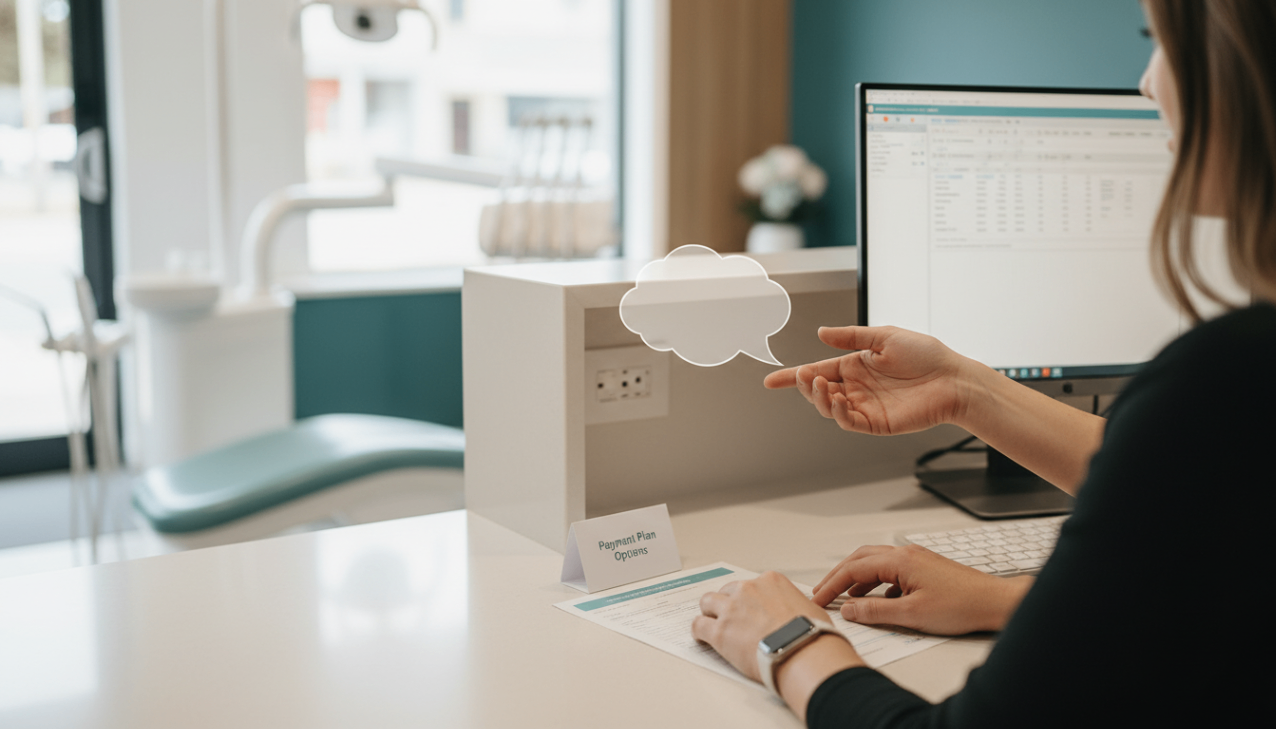
Understanding the value helps, but affordability is often the real worry underneath the question. That is why the response should end with a path forward, "and we can spread that cost over manageable weekly payments if that helps." Pairing the value explanation with a concrete, affordable option turns a dead-end objection into an open door. The patient moves from "I can't afford that" to "actually, that's doable," which is exactly where you want the conversation to land.
Practise it together
None of this sticks from a memo. The way reception gets good at the price question is by practising it, role-playing the objection in a team meeting until the calm response feels natural. One person plays the patient and pushes a little; the team member practises staying composed, explaining the value, and offering the path forward. A few rounds and the dread fades, because the conversation is no longer unfamiliar territory. Practice is what turns a coached approach into an instinctive one.
How SmilePass gives reception a confident answer
The "way forward" part of the response is far easier when there is a real option to offer. SmilePass lets you offer payment plans and memberships, so when a patient balks at a cost, your team is not stuck, they can immediately point to a manageable weekly or monthly option. Having that concrete answer ready takes the fear out of the price question, because reception always has something helpful to say next. It turns "why is it so expensive?" from a wall into a doorway.
The takeaway
"Why is it so expensive?" is usually a request for reassurance, not an attack. Coach your reception team to stay calm rather than defensive, to explain the value behind the number, and then to offer a concrete way to make it affordable, and to practise that until it feels natural. Back it with a real payment option to offer, and one of the most uncomfortable moments at the desk becomes one your team handles with genuine confidence.
Frequently asked questions
How should reception respond when a patient says treatment is too expensive?
Stay calm and treat it as a fair question, not an attack. Briefly explain the value behind the cost, what the treatment involves and why, then offer a concrete way forward such as a manageable payment plan. Pairing a clear value explanation with an affordable option is the most effective response.
Why do patients ask why treatment is so expensive?
Usually because they do not yet understand the value, are anxious about affording it, or are simply reacting to a bigger number than expected. It is rarely a genuine attack. Hearing it as a request for reassurance helps the team respond helpfully rather than defensively.
Should the team offer a discount when patients push back on price?
Reaching for a discount out of panic undercuts your value and trains patients to push. A better response is to explain the worth of the treatment and offer a payment plan that makes the full price manageable, so affordability is solved without devaluing the care.
How do I train my team to handle the price objection?
Coach a simple approach, stay calm, explain the value, offer a way forward, then practise it through role-play in team meetings until the calm response feels natural. Having a real payment option to offer also gives the team confidence, because they always have a helpful next step.
Written by Cristian Dunker, BDS, dentist (oral rehabilitation), with MBAs in Marketing (Sociesc-Brazil), Project Management (FGV-Brazil) and Finance (Bond - QLD).