
The best membership and payment system in the world delivers nothing if your team is not comfortable using it. A plan only gets offered if the front desk feels confident raising it; a payment plan only helps a patient if someone knows how to set it up; a smooth checkout only happens if the team has done it enough times for it to feel routine. The platform is only as good as the people operating it, which is why team training is not an optional extra but the thing that determines whether your investment in memberships and payments actually pays off. Get the whole team confident, and everything else follows.
This is for practice owners rolling out memberships and payments who want the team to actually deliver. Here is how to build that confidence. Our team training foundations guide goes deeper.
Why the team makes or breaks it
Every benefit of a good payments and membership system is delivered by a person. The recurring revenue depends on the front desk offering plans; the affordable treatment depends on someone confidently setting up a payment plan; the smooth patient experience depends on the team handling it all without friction. If the team is unsure, hesitant, or unfamiliar with the system, none of that happens reliably, however good the software is. The team is the bridge between the platform's potential and your practice's results, so their confidence is what actually unlocks the value.
Confidence comes from familiarity
People are confident with what they know well, and nervous with what they do not. A team member who has practised signing patients up, taking payments and offering plans many times does those things calmly and naturally; one who is still figuring it out hesitates, avoids, or fumbles in front of patients. The route to a confident team is therefore familiarity, giving everyone enough hands-on exposure to the system that the everyday tasks become second nature. Confidence is not a personality trait you hope your team has; it is a result you build through practice.
Everyone, not just one person
A common mistake is training one person, often the manager, and assuming the knowledge will spread. It rarely does. Everyone who touches the membership and payment process, especially the whole front desk, needs to be comfortable with the system, because patients deal with whoever is at the desk, not the one trained person. Spreading the confidence across the team means the experience is consistent no matter who is working, and it removes the fragility of relying on a single person who might be away exactly when they are needed.
Practise the real tasks
Training sticks when it is hands-on and focused on the actual everyday actions: signing a patient up, taking a payment, setting up a plan, finding a member's details, offering a membership in conversation. Having the team practise these real tasks, rather than just being shown them, is what turns knowledge into capability. Run through the common flows until they are routine, and rehearse the money conversations too, so that doing them for real feels familiar. Practice on the actual tasks the job requires is what builds the confidence that shows up at the desk.
Make it ongoing, not one-off
Confidence is not built in a single training session and then finished. It is reinforced over time, through ongoing practice, refreshers, and building familiarity into the everyday rhythm of the practice rather than treating training as a one-time event. New situations come up, new team members join, and skills fade without use, so the practices whose teams stay confident are the ones that keep training a continuing habit. This connects to building a simple, repeatable training system rather than relying on a single big session that fades.
How SmilePass supports a confident team
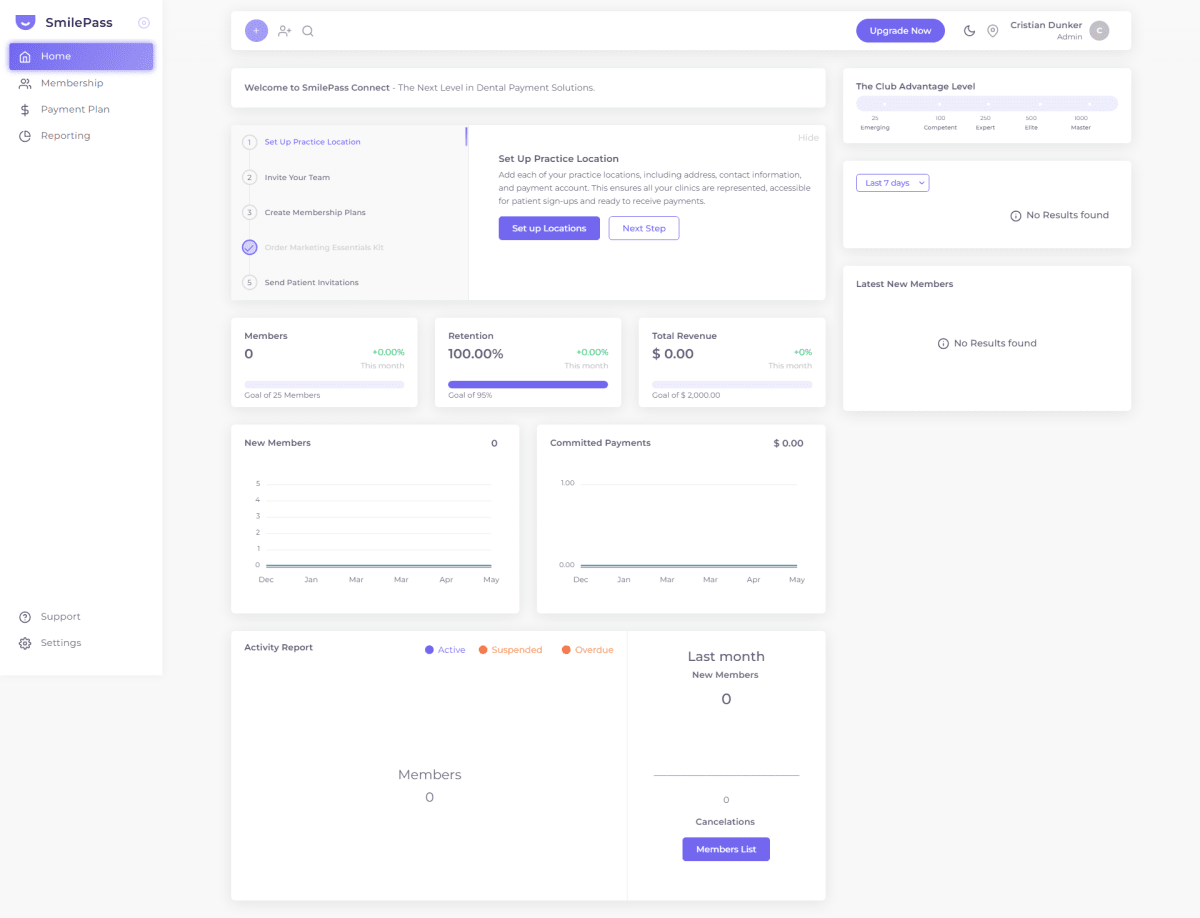
Building team confidence is much easier when the system itself is straightforward to learn, which is exactly how SmilePass is designed. Because the everyday tasks, signing patients up, taking payments, setting up plans, are simple and consistent, the team can become comfortable with them quickly, supported by clear guidance and documentation. A system that is easy to learn lowers the training burden and shortens the path to a confident team, so your whole practice can deliver the membership and payment experience well, not just one trained person.
The takeaway
Your membership and payment system is only as good as the team operating it, so getting the whole practice confident is what actually unlocks its value. Build that confidence through familiarity and hands-on practice on the real everyday tasks, spread it across everyone who touches the process rather than one person, and keep it going as an ongoing habit rather than a one-off session. Back it with a system that is genuinely easy to learn, and you turn a good platform into great results delivered confidently by your whole team.
Frequently asked questions
Why is team training important for a payments platform?
Because every benefit of the system is delivered by a person: the recurring revenue depends on the team offering plans, the affordable treatment on someone setting up a payment plan, the smooth experience on the team handling it without friction. However good the software, an unsure or unfamiliar team means none of that happens reliably, so their confidence is what unlocks the value.
How do I make my team confident with new software?
Through familiarity and hands-on practice. People are confident with what they know well, so give everyone enough practice signing patients up, taking payments and offering plans that the everyday tasks become second nature. Confidence is not a personality trait you hope for; it is a result you build through repeated practice on the real tasks.
Should the whole team be trained, or just a manager?
The whole team. Training one person and assuming the knowledge spreads rarely works. Everyone who touches the membership and payment process, especially the front desk, needs to be comfortable, because patients deal with whoever is at the desk. Spreading confidence keeps the experience consistent and removes reliance on a single person.
Is training a one-off or ongoing?
Ongoing. Confidence is not built in a single session and finished; it is reinforced through practice, refreshers and familiarity built into the practice's everyday rhythm. New situations arise, new team members join, and skills fade without use, so the teams that stay confident treat training as a continuing habit, not a one-time event.
Written by Cristian Dunker, BDS, dentist (oral rehabilitation), with MBAs in Marketing (Sociesc), Project Management (FGV) and Finance (Bond University).